
Share this post
How to automate tax workpapers with AI
Workpapers are where the season actually goes
Ask a preparer what ate their February and they will not say tax law. They will say the binder. Sorting a client's PDF dump into something reviewable, tying W-2 box 1 to the return, chasing the one brokerage statement that never arrived, rebuilding the same lead sheets they built last year. None of it is judgment work. All of it takes hours per return.
That is why workpaper automation is the part of AI adoption with the clearest payoff. The work is repetitive, the inputs are documents, and the output has a right answer. If you have been asking how to automate tax workpapers with AI, this is the honest version: what automates well today, what does not, and what to check before you sign anything.
What workpaper automation actually means
Vendors use the phrase loosely, so it is worth being precise. A workpaper package has a lifecycle: documents come in, someone organizes them, someone pulls the numbers out, someone ties those numbers to the return, and a reviewer signs off on the trail. Automation software can take over some or all of those stages.
The distinction that matters is whether the software reads the actual source documents or just reorganizes files. A tool that renames PDFs and sorts them into folders saves you twenty minutes. A tool that reads the 1099-B, extracts every lot, and ties the totals to Schedule D changes how the return gets prepared.
1. Document intake and collection
The first stage is getting documents from clients without a preparer playing secretary. Software here sends request lists, accepts uploads, and flags what is still missing against the prior-year checklist. This stage has been automatable for years and most practice management tools do a serviceable job of it.
What AI adds is recognizing what a document is on arrival. A client uploads twelve files named scan001 through scan012; the system identifies two W-2s, a consolidated 1099, a K-1, and a mortgage statement, and knows the K-1 for the second partnership is still missing.
2. Classification and organization
Once documents are in, they need to become a binder a reviewer can navigate. AI classification sorts documents by type and taxpayer, bookmarks multi-document PDFs, and builds the index automatically. Filed builds organized binders and lead sheets from the raw client upload, so the preparer opens a structured workpaper file instead of a folder of scans.
This stage is low risk to automate. A misclassified document is visible and cheap to fix, which makes it a good first step for a firm that wants to prove the concept before touching the return itself.
3. Data extraction
Extraction is where the real hours are. Reading every box of every W-2, 1099, and K-1 into a lead sheet is the definition of work a machine should do. Modern document AI reads these forms reliably, including the messy cases: consolidated brokerage statements, K-1s with footnotes, handwritten corrections.
The standard to hold vendors to is not extraction accuracy in isolation. It is whether every extracted number carries a citation back to the source document, so a reviewer can click a figure on the lead sheet and see the exact line on the exact page it came from. Extraction without citations just moves the verification work downstream.
4. Tie-outs and cross-referencing
A workpaper package earns its keep when the numbers on the return tie to the numbers in the file. This is the stage most firms still do by hand and the one where document-first AI changes the math. Filed compares the draft return against the source documents line by line and flags what does not match: the transposed digit, the missing 1099, the K-1 income that never made it to the K-1 input screen.
Tax software diagnostics do not do this. They check whether the return is internally consistent, not whether it matches what the client sent. A preparer can type $15,000 instead of $1,500 and every diagnostic stays green because the math still works.
5. The review trail
The last stage is sign-off: who checked what, what changed, and why. Automation here means every flag, correction, and resolution is logged without the reviewer maintaining a separate tickmark legend. Firms using Filed report a 64% reduction in review cycles, and most of that comes from reviewers starting with a cited action list instead of a blank binder.
What still needs a human
Judgment does not automate, and the firms that get this right do not try. Whether a distribution is really a loan, how aggressive to be on a home office, what the client meant by the note scrawled on the organizer. AI gets those questions to the surface faster. It does not answer them.
Treat any vendor claim of a fully autonomous workpaper-to-return pipeline with suspicion. The useful products position the preparer as the decision-maker and do the reading, sorting, extracting, and tying underneath them.
How to evaluate workpaper automation software
- Does it read source documents or just file them? Ask to see a consolidated 1099 processed end to end, not a demo W-2.
- Can you verify every number? Click a figure and it should show you the source line. No citation, no trust.
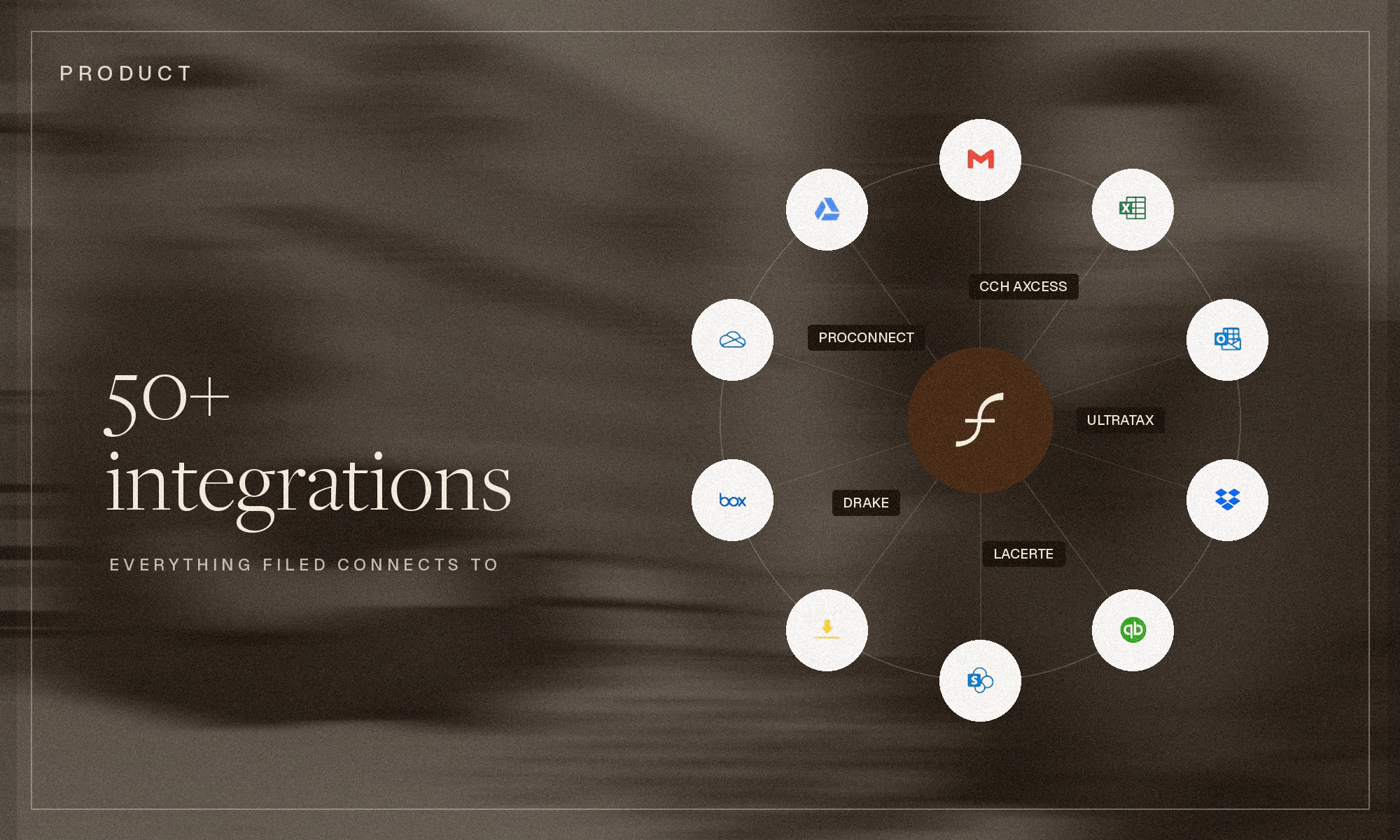
- Does it work inside your tax software? Filed supports CCH Axcess, UltraTax, Lacerte, Drake, and ProConnect. Whatever you pick should meet your stack where it is, not ask you to switch.
- How does it handle the documents that are wrong? Duplicates, amended forms, statements that contradict each other. The messy cases are the actual job.
- What happens to your data? Look for SOC 2 Type II and a clear answer on whether client data trains shared models. At Filed it does not.
Frequently asked questions
How much time does workpaper automation save per return?
Firms using Filed save an average of 42 minutes per return across prep and review. The range is wide: simple 1040s save less, document-heavy returns save more.
Can AI build workpapers for business returns?
Yes. Filed supports 1040, 1065 with K-1s, 1120, 1120-S, 1041, and 990 work, and business returns are usually where binders are heaviest.
Do we have to change tax software to automate workpapers?
No. Document reading and tie-outs happen against the return your existing software produces. That is the point: keep the system of record, upgrade what it sees.
Where to start
Pick your ten most document-heavy returns from last season and run them through an automated workpaper flow before the next one starts. If you want that test to be on your own clients' actual binders, Filed runs inside your tax software and comes with a 60-day money-back guarantee. Related reading: why workflow memory is the critical gap in AI tax preparation.
Subscribe to our newsletter
Explore our latest insights
Discover valuable articles to enhance your knowledge.