
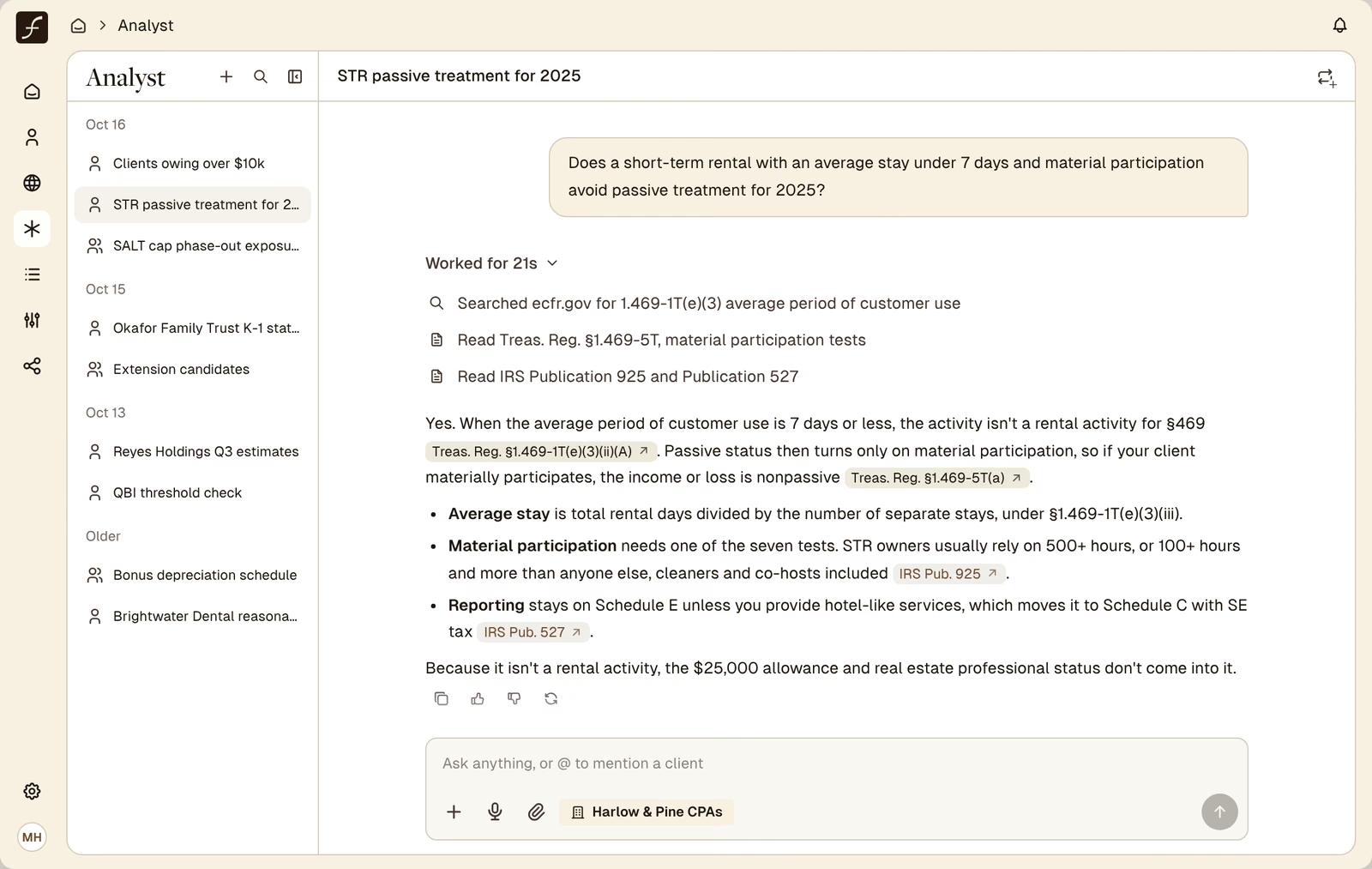
Figures from live sources, not model memory.
Every answer links to what it relies on.
Check the rule against your own clients.
Built for the questions you would normally look up.
Analyst handles the research that fills a preparer's day: thresholds that moved this year, rules with exceptions and questions that need a cite before anyone signs.
- Limits and phase-outs. SALT, QBI, child tax credit and the rest, for the current year.
- Safe harbors and penalties. Estimated tax safe harbors and when an underpayment penalty applies.
- Depreciation. Bonus depreciation rates and Section 179 limits for the year in question.
- Activity rules. Material participation, short-term rentals and passive loss limits.
Why not just ask a chatbot?
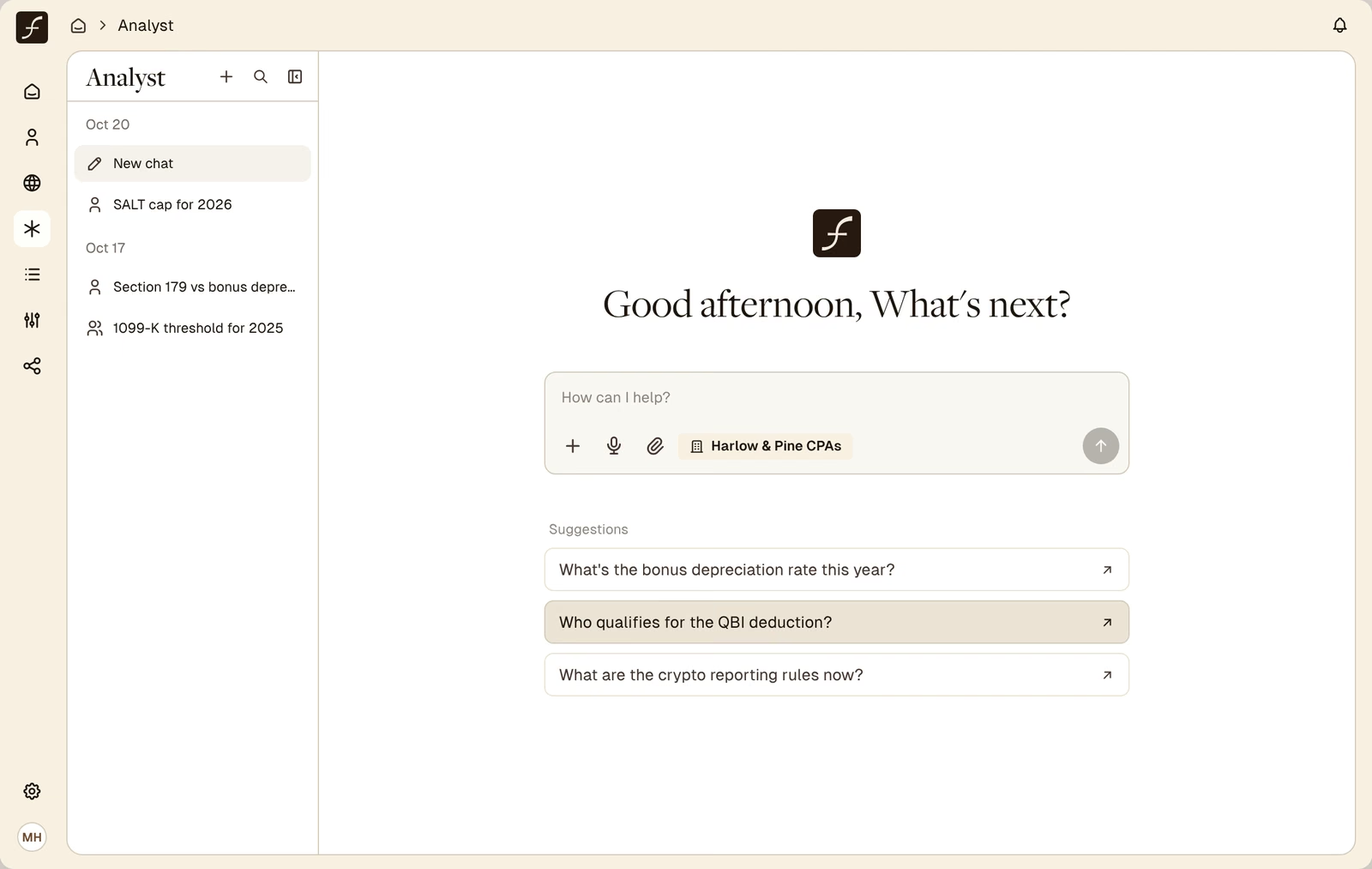
A general chatbot answers from training data that can predate the law it is describing. Tax rules change every year, and recent legislation moved a lot of numbers. Analyst searches live sources when you ask, shows where each figure came from and keeps the citation next to the answer, so your reviewer can check it in a click.
- Live search. Rates, thresholds and deadlines are looked up when you ask.
- Primary sources first. The Internal Revenue Code, Treasury regulations and IRS guidance.
- Checkable. Citations open the source, so nobody has to take the answer on faith.
From the rule to your client list.
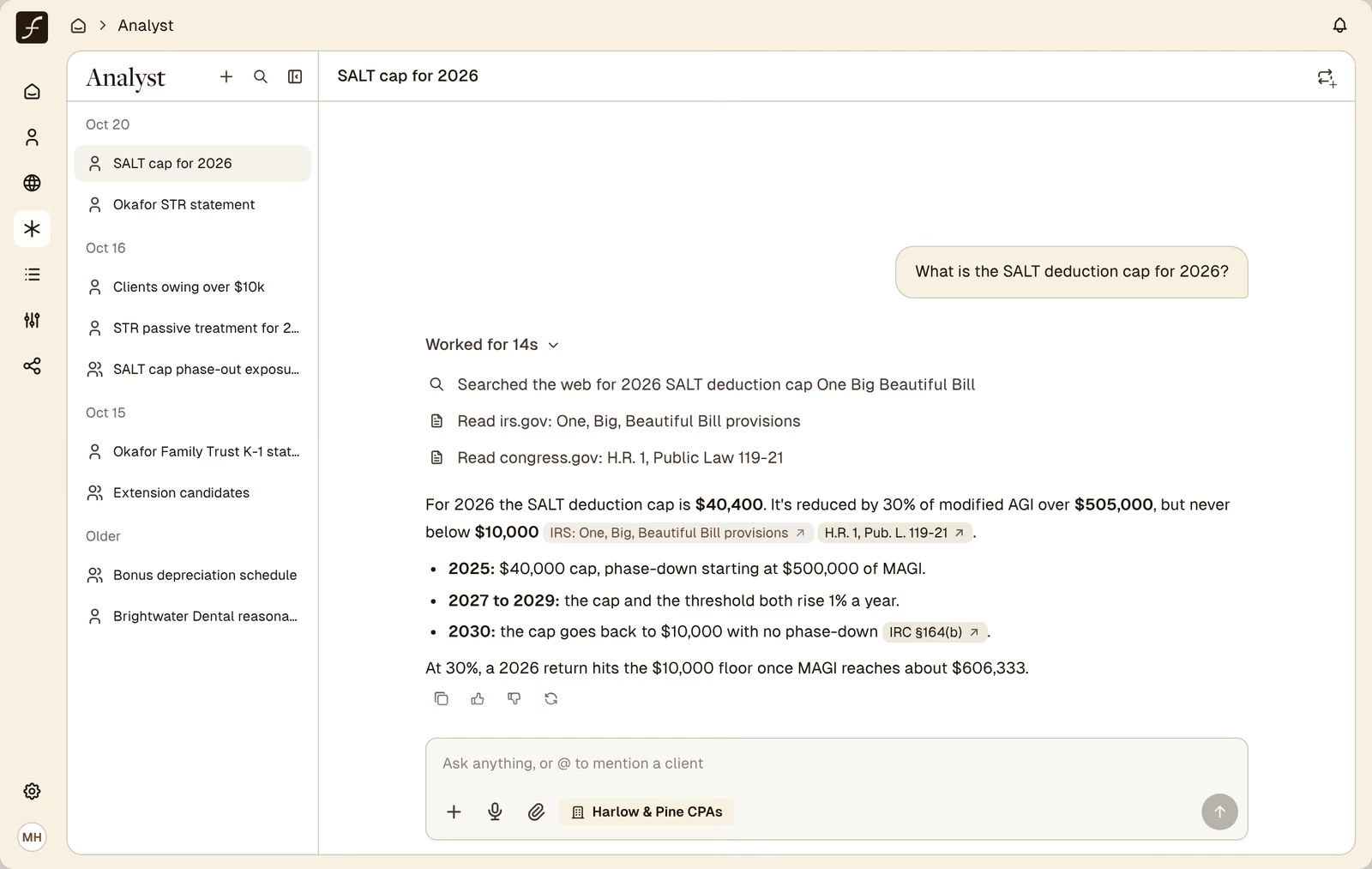
Research usually ends with someone exporting a client list and checking it by hand. Analyst already knows your clients, so the follow-up question is one message: which of my clients does this affect?
- Who it hits. Clients above a threshold, in a phase-out range or newly eligible.
- The figures behind it. Each client's numbers sit next to the rule that applies.
- Ready to act on. Export the list or save it to each client's binder.
Answers you can put in the file.
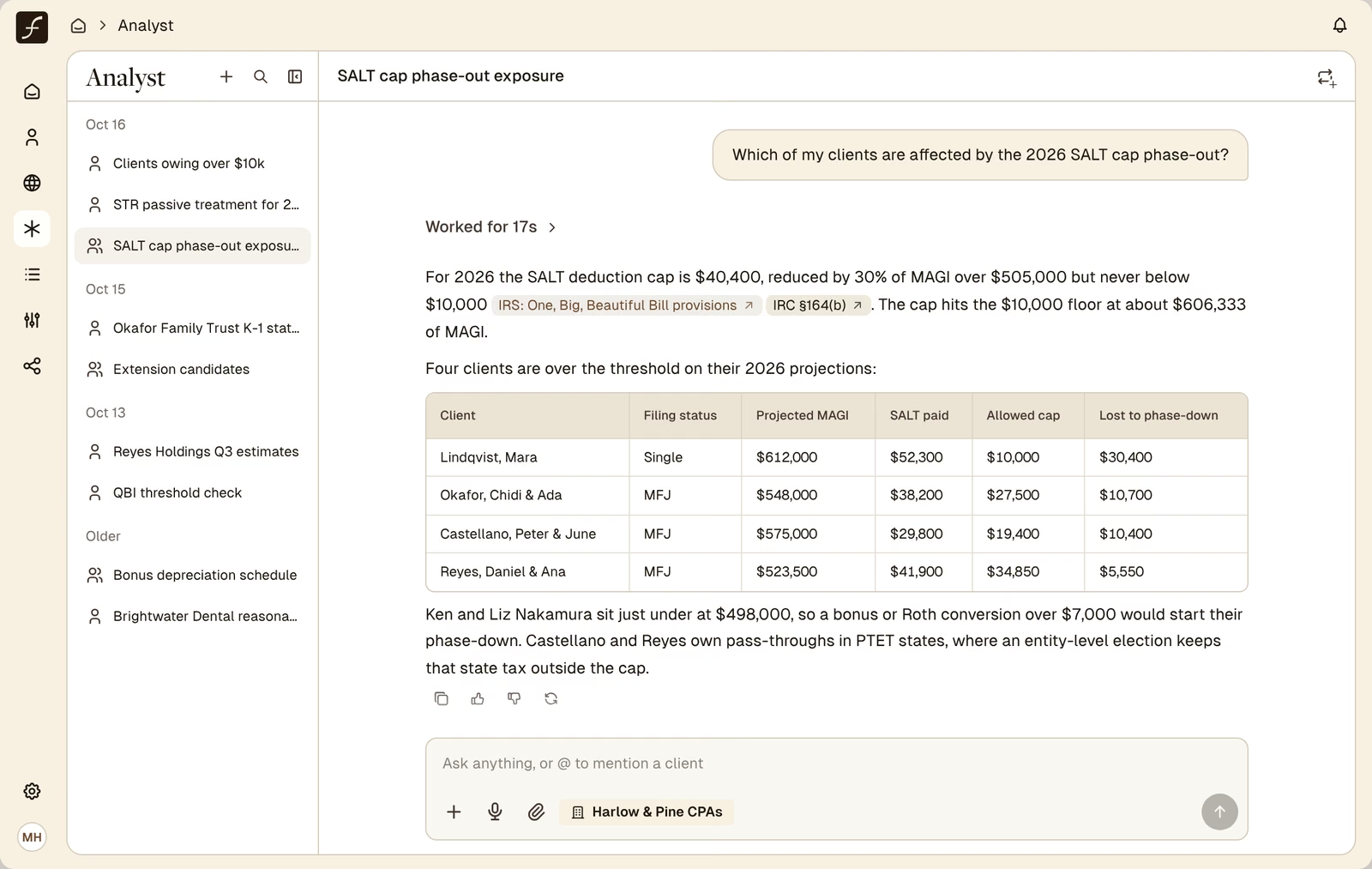
Research is rarely the last step. Ask Analyst to turn an answer into the thing you need next, then download it or save it to the client.
- Research memos. The question, the rule, the citations and the conclusion, ready for review.
- Return statements. A draft statement to attach to the return, such as an election or a disclosure.
- Client explanations. A plain-English email explaining what a rule means for that client.
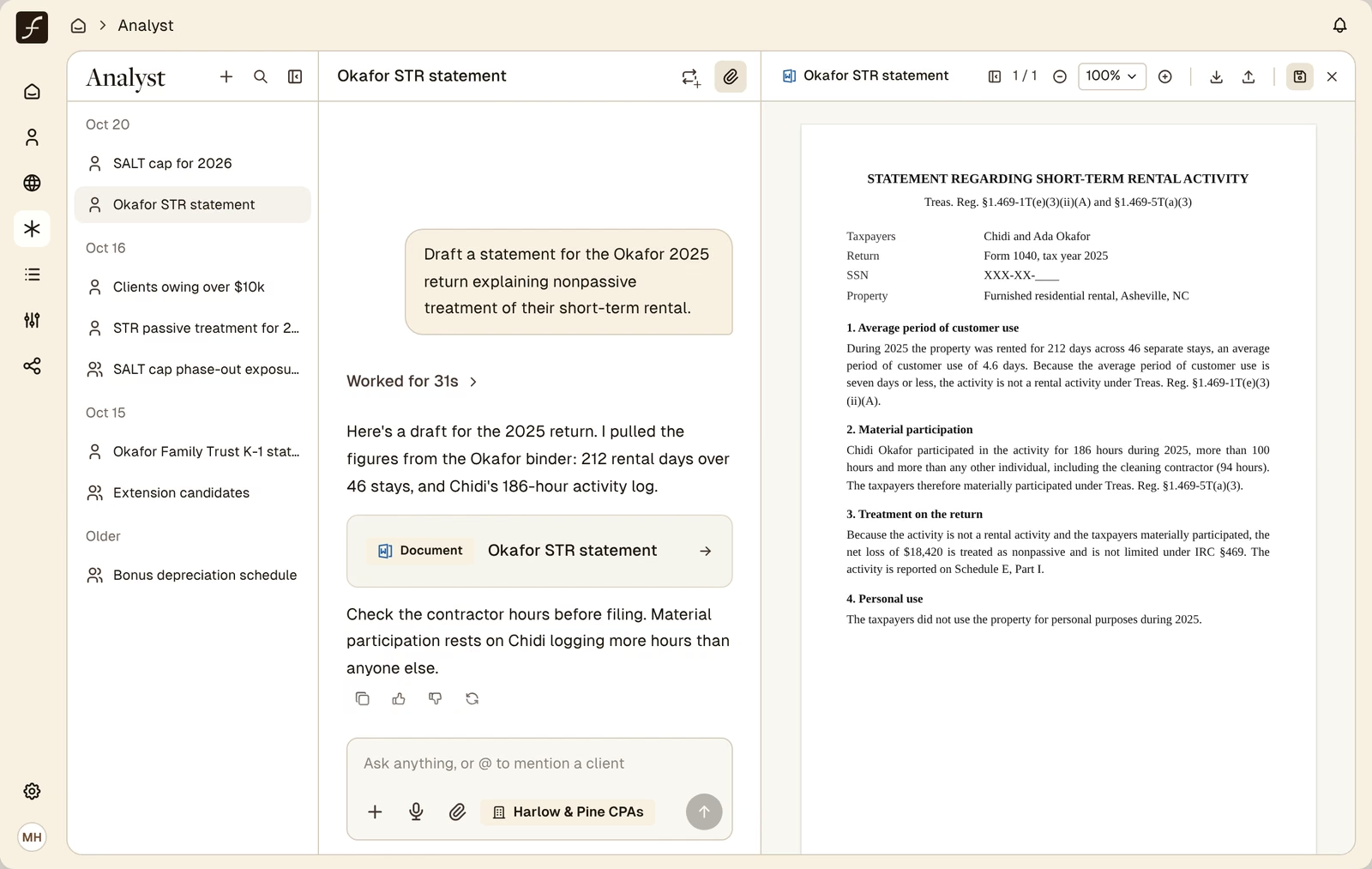
Analyst and a standalone research tool.
Plenty of firms keep a research subscription. Here is where each one fits.
| Analyst | Standalone research tool | |
|---|---|---|
| Cited answers | Yes | Yes |
| Current-year figures | Yes, from live sources | Yes |
| Proprietary treatise library | No | Often |
| Knows your clients | Yes | No |
| Applies the answer across your client base | Yes | No |
| Drafts memos, statements and client emails | Yes | Varies |
| Pricing | Included in your Filed plan | Usually a per-seat subscription |
Questions about tax research in Analyst.
AI tax research means asking a tax question in plain English and getting an answer drawn from tax law and guidance, with the sources cited. In Analyst, that means a current-year answer from live sources, citations to the code section, regulation or IRS guidance it relies on, and the option to check the rule against your own clients.
Analyst searches live sources and favors primary authority: the Internal Revenue Code, Treasury regulations and IRS guidance such as notices, revenue procedures, publications and form instructions. Each answer lists its citations so your team can open and check them.
Analyst looks figures up when you ask rather than relying on what a model learned in training, so thresholds, phase-out ranges and safe harbors reflect the current year.
For everyday research, many firms find it covers what they need, and it is included in their Filed plan. Analyst does not include the proprietary treatise libraries some research services license, so firms that depend on those for complex work may keep them. Unlike a standalone research tool, Analyst can apply the answer to your own clients.
No. Analyst does the research and drafting so your team can make the call. Your professionals review the answer and its citations before relying on it, the same way they would review a junior colleague's research.
Yes. Tax research is part of Analyst, and Analyst is included in every Filed plan.