.png)

Share this post
Can AI automate partnership tax returns?
Short answer: yes, with limits worth understanding
For years the answer was no. Automation vendors demoed on clean W-2s and left the 1065 pile alone, because partnership returns are where tax work gets genuinely hard: layered K-1s, allocations that follow the operating agreement instead of the ownership percentages, and footnotes that change the answer.
That has changed. AI can now do real work on partnership returns. Not all of it, and not unsupervised, but enough that firms with a heavy 1065 book are automating the mechanical layer and giving preparers their evenings back. Here is where the line actually sits in 2026.
Why partnership returns resisted automation
A 1040 is mostly a reading problem. The documents say what the numbers are, and the job is getting them into the right boxes. A 1065 is a reading problem plus a logic problem. Income has to be allocated across partners according to the agreement, capital accounts have to roll forward correctly, and a single K-1 from an underlying partnership can carry a footnote about 11ZZ items, QBI, or state sourcing that a template will never anticipate.
Older automation choked on exactly that. OCR tools could read a standalone K-1's face but lost the footnotes, and nothing downstream understood that the numbers had to reconcile across the partner schedules. So firms kept preparing partnership returns by hand while their 1040 pipeline modernized.
What AI handles on a 1065 today
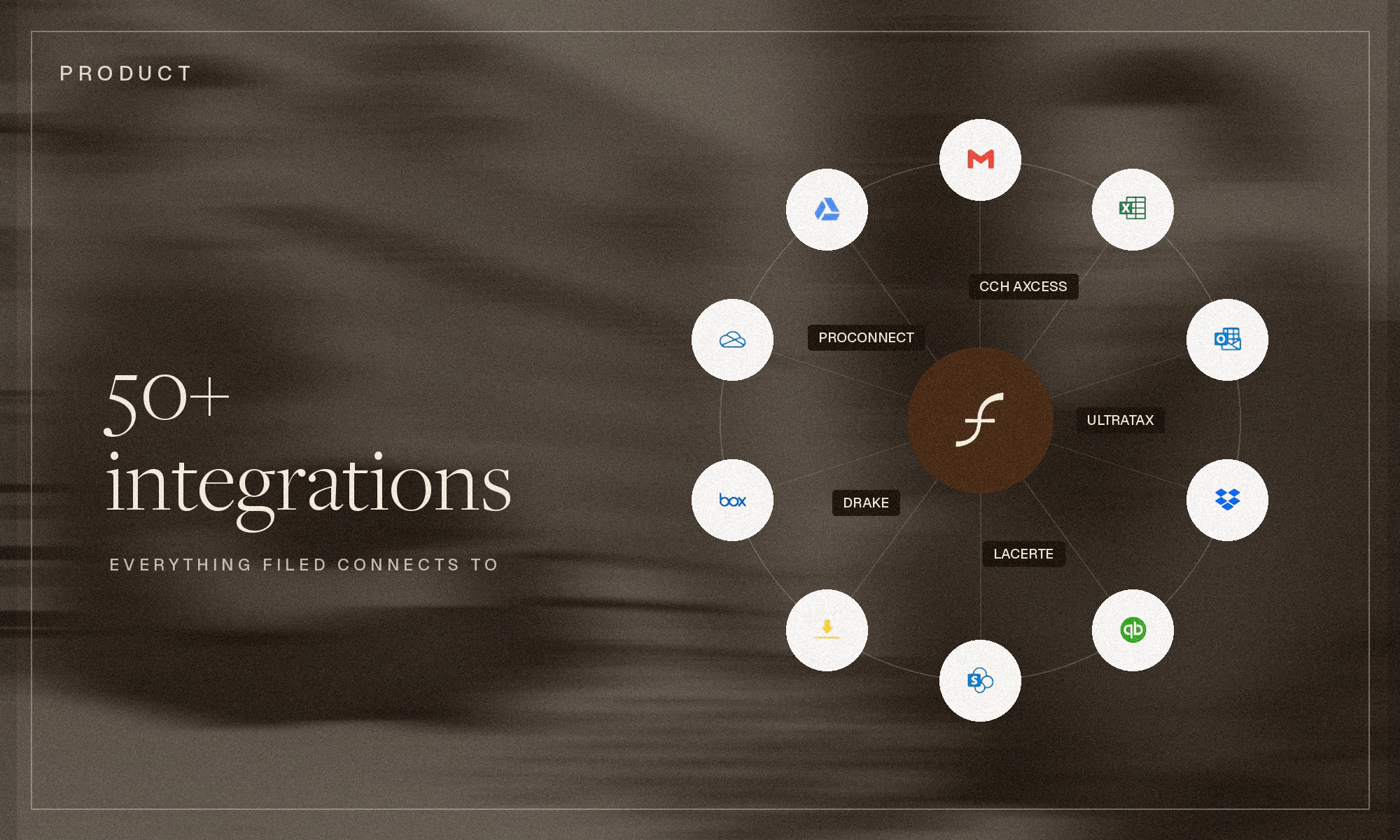
Document-first AI changed the reading half of the problem completely. Filed reads the source documents a partnership return is built from, including multi-page K-1s with footnotes and state schedules, extracts the values, and enters them into the return in your tax software. Prep integration is live for Drake, ProConnect, UltraTax, and CCH Axcess, and business tax support covers 1065 with K-1s, 1120, 1120-S, 1041, and 990 alongside 1040 work.
The logic half is where review automation earns its place. After the return is drafted, Filed compares it against the source documents line by line: does the ordinary income on the face tie to the books, did every K-1 item land on the right partner schedule, do the capital accounts roll from prior year. Discrepancies come back as a cited action list, so the reviewer checks findings instead of re-deriving the return.
The practical effect is that the preparer starts from a populated return with the tie-outs already run, instead of a blank form and a binder of PDFs.
What the preparer still owns
Allocation judgment stays human. Whether a special allocation has substantial economic effect, how to treat a distribution that looks like a disguised sale, what to do when the operating agreement and the prior-year workpapers disagree. AI surfaces these questions earlier because the mechanical layer is done, but a partner still answers them.
The same goes for anything the documents cannot settle: basis positions built on facts the client never wrote down, elections with multi-year consequences, and the judgment calls that make a firm worth its fee. The honest framing is that AI does the analytical work so the CPA can spend the season on judgment work. Any vendor promising a hands-off partnership return is describing a return they have not seen.
Questions to ask any vendor about business returns
- Show me a real K-1 with footnotes. Not a specimen form. Bring one of your own gnarly ones to the demo and watch what happens to the 11ZZ detail.
- Where do the extracted numbers go? Into your tax software's actual input screens, or into a portal you re-key from. The difference is most of the time savings.
- Can the reviewer verify every figure? Each number should cite the source document and page it came from.
- What entity types are supported? If the roadmap says business returns are coming, the product does 1040s. Filed supports 1065, 1120, 1120-S, 1041, and 990 today.
- How is client data handled? SOC 2 Type II, and a straight answer on whether your clients' returns train shared models. At Filed they do not.
Frequently asked questions
Can AI prepare a partnership return end to end?
It can read the documents, populate the return, and run the tie-outs. Allocation decisions, elections, and final sign-off stay with the preparer, which is how it should work.
Does automation handle tiered partnerships?
Reading K-1s from underlying partnerships, including footnotes, is exactly what document-first extraction is for. The structural judgment about how tiers interact remains the preparer's call.
Which tax software does this work with?
Filed's prep integration covers Drake, ProConnect, UltraTax, and CCH Axcess, and review works across CCH Axcess, UltraTax, Lacerte, Drake, and ProConnect.
Where to start
Take five partnership returns from last season, the ones with the worst binders, and run them through an automated flow before extension season ends. Filed prepares business returns inside your tax software, with a 60-day money-back guarantee. Related reading: the ultimate AI for accountants guide: data to compliance.
Subscribe to our newsletter
Explore our latest insights
Discover valuable articles to enhance your knowledge.